Topics – Society
Human relationships are mediated by complex systems of power and privilege that determine our access and entitlement to health, safety, employment, dignity, home and belonging. As power becomes increasingly concentrated in the dominant classes, divisions and inequality based on race, gender, class, ability, sexuality and religion, among others, are becoming more prominent. These articles look at how these systems of power operate to divide us, and how we can overcome them and work toward a common humanity.
-
Decolonizing together
Moving beyond a politics of solidarity toward a practice of decolonization
Given the devastating cultural, spiritual, economic, linguistic and political impacts of colonialism on Indigenous people in Canada, any serious attempt by non-natives at allying with Indigenous struggles must entail solidarity in the fight against colonization.
-
Homeplace as revolutionary front
Taking “care” back into our hands
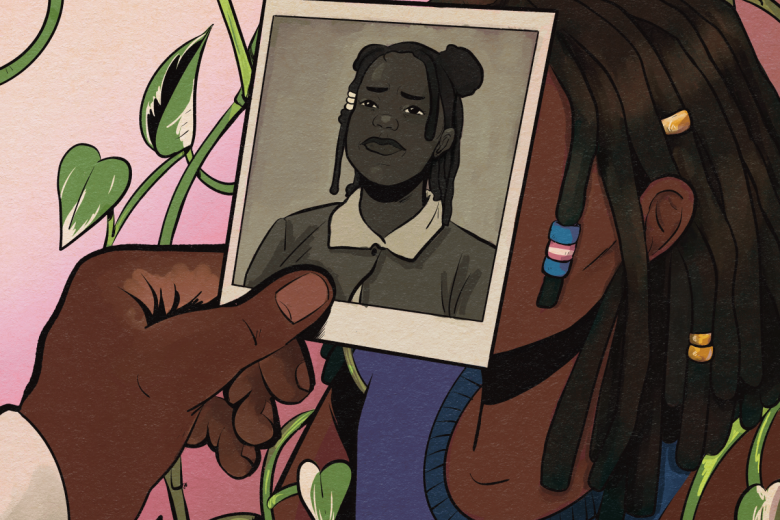
Homeplace is where we are grown and raised into social beings, where we receive our earliest definitions of humanity, where we first learn to recognize love, violence, justice and pain. Yet it has persisted in our imagination as a private sphere of emotional and material dependence, rather than as a front in revolutionary struggle.
-
Crisis in care
Ontario pioneers the privatization of long-term care
As the pioneer of privatized care in Canada, Ontario has opened the doors for a corporate takeover of long-term care homes, resulting in chronic understaffing by profit-seeking multinational providers.
-
The teacher trap
Teaching, child care, and women’s work in the “caring professions”
While teaching duties undoubtedly exceed those of child care, how can teachers defend themselves without participating in the downgrading of “caring professions” more broadly?
-
“The best game you can name”
Hockey is no stranger to militarism, but radical fans aren’t about to call the game
Fifteen thousand people pack the seats of the sold-out MTS Centre in Winnipeg. They cheer wildly as the home team Jets rush the puck up through the neutral zone. Cheers erupt louder still as shots are fired on goal, bodies slammed brutally into boards, and pucks are buried deep in the visitor’s net.
-
Letter from the editor
Decolonizing our food system
Necessary for survival and intricately intertwined with our emotions, spirituality and culture, food holds major power. As such, the systems that govern its cultivation, distribution and consumption are fertile battlefields for controversy, domination, generosity and resistance.
-
Food for all!
Food justice needs migrant justice
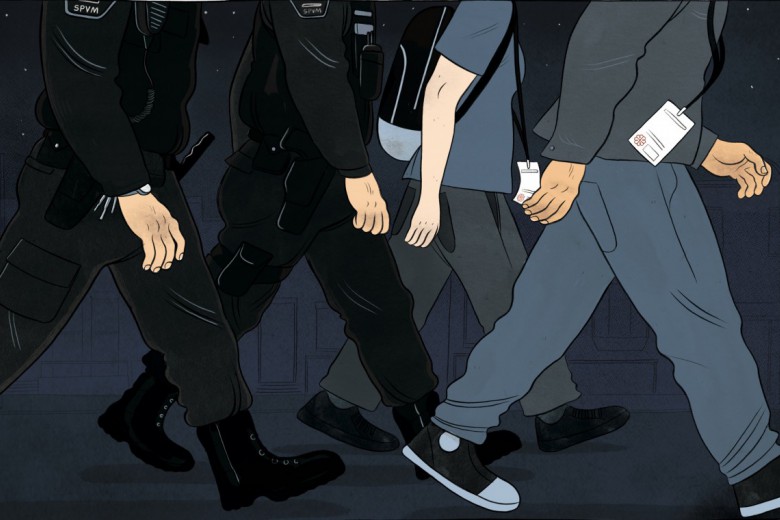
In 2009, immigration enforcement entered a community garden outside a Toronto food bank and deported one of its users. The deportation was but one of the 70-odd sweeps, detentions and deportations that happen in Toronto every single day and underscored one of the barriers to food access for undocumented migrants in this country.
-
From apple pie and mother’s milk to pop-tarts and formula
How will we feed the next generation?
Ninety per cent of pregnant families in Canada plan to breastfeed their children. After the recommended six months later, less than 25 per cent of those families are still exclusively breastfeeding. This is a story of severed cultural ties to breastfeeding knowledge; “breast is best” lip service by many care providers, hospitals and government funding models; and huge marketing dollars from the big multinationals that produce artificial human milk (marketed as the more genteel “formula”).
-
Fair trade and empire
An anti-capitalist critique of the fair trade movement
Fair trade marketing and advocacy rely on the idea that fair trade increases connectedness between Global South producers and Global North consumers. But while fair trade does reduce the number of intermediaries in the supply chain as compared to the free trade system, it also serves to reinforce racist and colonial distinctions between the poor Global South farmer and the benevolent Global North consumer. While it may channel slightly more income into agricultural communities, it ultimately fails to address the colonial capitalist structures that produce the impoverishment of farmers on an ongoing basis.
-
Propagating the food movement
A uniquely decentralized and mighty movement
Rhizomes are horizontal, underground plant stems with the ability to create complex root systems. They can expand relentlessly underground, often lying dormant for years, and re-emerge as healthy plants in different locations when the internal and external conditions are right. Each new plant created is connected to the parent but exists as its own independent, flourishing entity. The rhizome can serve as a metaphor for the Canadian food movement – a decentralized network of diverse, self-organizing, interconnected initiatives with no identifiable beginning or end.