Tags – Feminism
-
Walking papers
Honourable mention, creative writing contest (fiction)
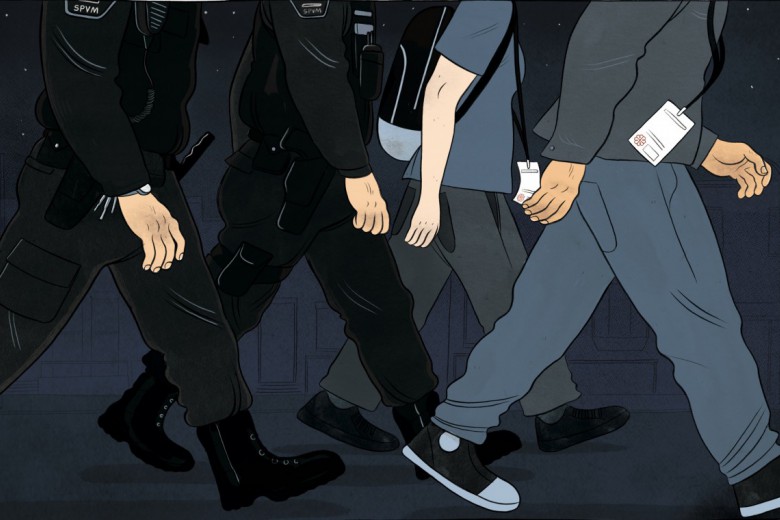
Kelly is tragically reliable. When she is laid off from her government job, she finds another, more lucrative, way to pay the bills.
-
Homeplace as revolutionary front
Taking “care” back into our hands
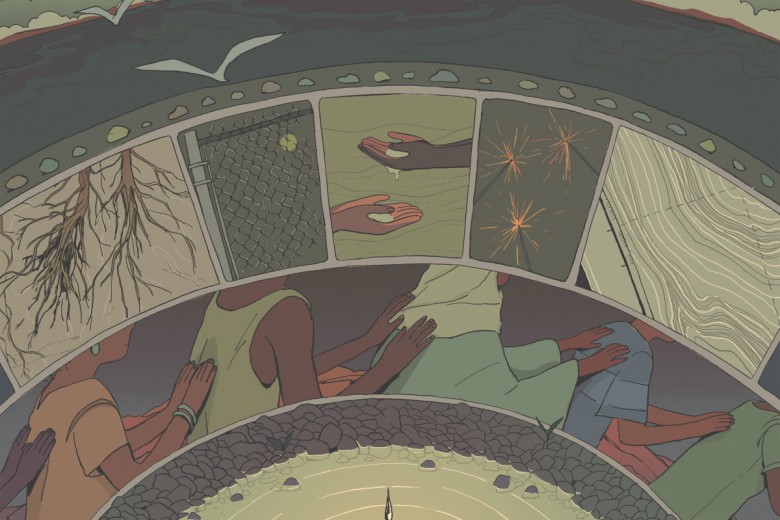
Homeplace is where we are grown and raised into social beings, where we receive our earliest definitions of humanity, where we first learn to recognize love, violence, justice and pain. Yet it has persisted in our imagination as a private sphere of emotional and material dependence, rather than as a front in revolutionary struggle.
-
From the ground up
Meet the women at the forefront of their communities’ transition from forestry to farming
On the West Coast, agriculture has always taken a back seat to logging, which has generated a lot of money for folks in these company towns. Now, as the export-the-trees-and-import-everything-else economy seems to be running out of steam, there’s renewed interest in small-scale farming as both a way to make a living and as a community resource. And in contrast to the decades of focus on the male-dominated forest industry, this movement is in many cases being led by women.
-
Letter from the editor
An invitation to share accountability
The first step toward emancipation must be recognition of the shared struggle between all those considered less valuable by our state and social structures. Liberation can only happen collectively and across all communities simultaneously. Freedom at the expense of others’ freedom is not freedom at all, but a different and twisted kind of enslavement.
-
Hierarchies of worthiness
Women and victimhood in the Canadian media
In news coverage of violence, women are almost always portrayed as victims. Whether they are worthy, innocent victims in need of rescue (“virgins”), as in the case of Afghan women post-9/11, or unworthy, culpable victims to be ignored or incarcerated (“vamps”), as with Indigenous women in Canada, depends on their strategic value to the forces in power.
-
Lives less livable
Judith Butler on expanding queer solidarity beyond sexuality
Butler’s theory of gender-as-performance remains her best-known contribution to academia, but for the last decade her attention has gradually shifted from gender to the politics of war. Now she’s struggling with questions like, whose deaths matter, and why are some deaths grievable but others not?
-
Everyday drag
A photo essay on the aesthetics of gender and the pressure to perform
As a female-bodied pastor, I work in a profession where people still openly argue about whether or not women should be allowed to serve, and I am regularly called father on the streets by bewildered people who don’t have any language for a minister who wears a bra. This photo essay seeks to dramatize the pressures of performance, repression of sexuality and particularly the suppression of breasts and menstruation that affect the lives and work of female clergy.
-
Safer sex work
The case for decriminalization
“In my view the law plays a sufficient contributory role in preventing a prostitute from taking steps that could reduce the risk of such violence.” With these concluding remarks by Justice Susan Himel, the laws that kept sex work illegal in Ontario were struck down in November 2010. The ruling, however, has been stayed, pending an appeal by the federal government that’s scheduled to begin in June, 2011.
-
Intervening in violence
Mimi Kim on gender, the state and community accountability
Mimi Kim is a second-generation Korean American and long-time organizer against domestic and sexual violence, racism and imperialism. Her pragmatic approach to defending the safety and integrity of women stems from years of work on the ground with women of colour and others who have been marginalized from the mainstream anti-violence movement. We caught up with her to learn more about her perspective on the relationship between interpersonal and state violence, the criminal justice system, and community accountability.
-
Witch hunts past and present
Book review
In the classic zine Witches, Midwives & Nurses: A History of Women Healers, republished as a book with a new introduction in 2010, authors Deirdre English and Barbara Ehrenreich provide an overview of the repression and exclusion of women lay healers in Europe and the United States. The authors explore the connection between the witch hunts in Europe and attempts to eliminate and discredit women healers, as well as the rise of an elitist and male-dominated medical establishment in the United States.