Tags – Capitalism
-
Land rush
Speculators stake claim to Prairie farmland
Amid skyrocketing food prices, climate-related instability, and declining soil and water resources, wealthy investors have begun to size up the world’s farmland as both an investment opportunity and a hedge against food crises and political turbulence. Saskatchewan’s farmland has gained a particularly noteworthy reputation, making the province a global hot spot for farmland investment.
-
Letter from the editor
Beyond inclusivity
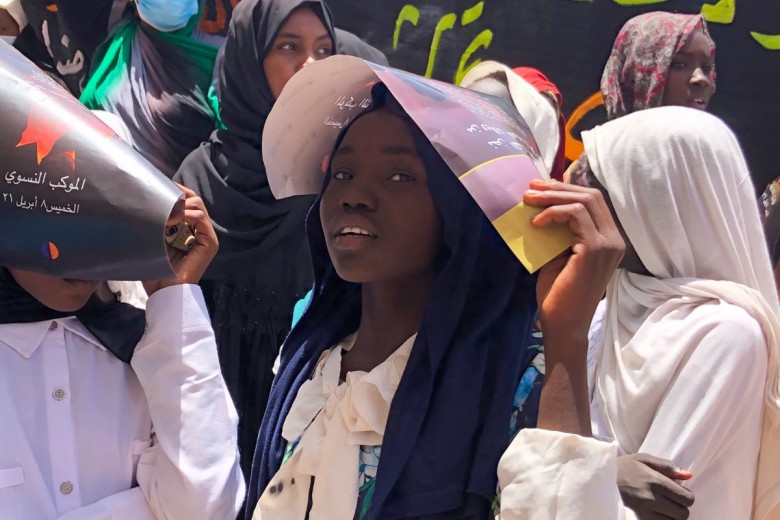
Our efforts to organize more co-operatively must go beyond inclusivity. For power to be truly re-distributed, we must pay particular attention to the voices that have been most silenced by global capitalism.
-
Reimagining revolution
The Occupy movement, in photos
The Occupy movement has demonstrated a tenacious and effective commitment to non-violent, collaborative tactics. These photos, from various photographers, capture some of the ways in which the Occupy movements have helped us to reimagine how we organize and relate to one another within our collective struggle for justice.
-
Canadian mining on trial
Murder, impunity and Pacific Rim in El Salvador
As a court battle ensues between the Salvadoran government and Canadian mining company Pacific Rim, the disappearances and murders of anti-mining activists are a tangible manifestation of the lack of respect for individual and collective rights in the face of highly lucrative development projects.
-
Letter from the editor
A radical imagination
As the Occupy movement continues to gather momentum, this moment presents an opportunity to re-evaluate the role of unions in social transformation and look beyond the reactive task of simply defending the working conditions of their members within the capitalist system, to which much of the labour movement has become resigned.
-
Homeplace as revolutionary front
Taking “care” back into our hands
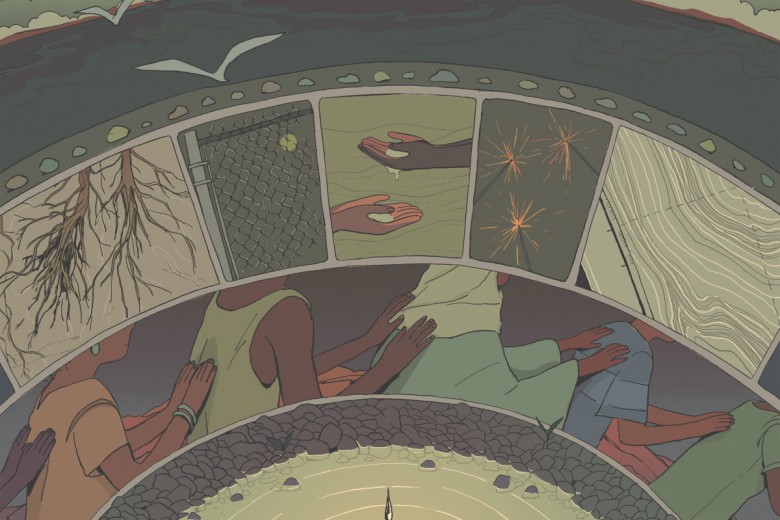
Homeplace is where we are grown and raised into social beings, where we receive our earliest definitions of humanity, where we first learn to recognize love, violence, justice and pain. Yet it has persisted in our imagination as a private sphere of emotional and material dependence, rather than as a front in revolutionary struggle.
-
The confines of compromise
Does the labour movement encourage resistance, or contain it?
Has the labour movement become comfortable in a reactive, and even survivalist, mode of operating? What would a labour movement that strengthened and encouraged resistance and militancy, rather than managed it, look like?
-
From apple pie and mother’s milk to pop-tarts and formula
How will we feed the next generation?
Ninety per cent of pregnant families in Canada plan to breastfeed their children. After the recommended six months later, less than 25 per cent of those families are still exclusively breastfeeding. This is a story of severed cultural ties to breastfeeding knowledge; “breast is best” lip service by many care providers, hospitals and government funding models; and huge marketing dollars from the big multinationals that produce artificial human milk (marketed as the more genteel “formula”).
-
Open for business
Imperial intervention has pried Afghanistan open for foreign investment
Afghanistan, and the surrounding region, has been in the crosshairs of imperial expansionists for centuries. In 1600, Queen Elizabeth I set the East India Company on its march northward through India. This expansion of the British empire was confronted in Afghanistan in the early 19th century by the southward expansion of the Russian empire, instigating a series of wars known as the “Great Game.”
-
Letter from the editor
Crisis and collective action
This summer marked the 75th anniversary of the Regina Riot, a landmark in the history of Briarpatch’s hometown and an event with political reverberations well beyond the city itself. On June 3, 1935, at the height of the greatest crisis of capitalism in the country’s history, 1,200 striking workers departed relief camps in British Columbia aboard eastbound boxcars to deliver demands for employment and fair wages to the federal government of R.B. Bennett